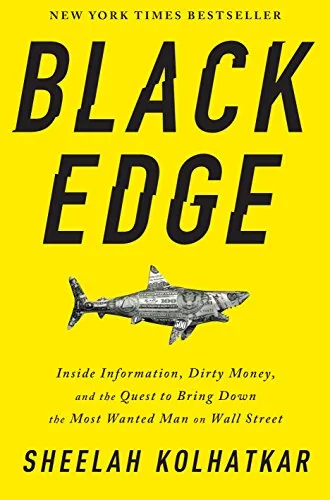
Black Edge
Inside Information, Dirty Money, and the Quest to Bring Down the Most Wanted Man on Wall Street
- Published
- 2017
- Pages
- 368 pages
- Publisher
- Random House
- Readers
- 5 members have read this
New Yorker writer Sheelah Kolhatkar follows the seven-year federal pursuit of Steven A. Cohen and SAC Capital, the hedge fund whose culture of edge shaded into black edge, Wall Street slang for inside information. The firm pleaded guilty and paid about $1.8 billion, but Cohen was never charged. It is the definitive account of modern insider trading and of what an information arms race does to a firm.
Kolhatkar, a former hedge fund analyst and a staff writer at The New Yorker who earlier covered Wall Street for Bloomberg Businessweek, tells two stories at once. One is how Cohen built SAC into one of the most profitable hedge funds ever, a firm that paid top dollar for any informational advantage and kept its portfolio managers under constant pressure to deliver it. The other is the government's campaign to work up the chain toward Cohen, centered on portfolio manager Mathew Martoma's trade, which prosecutors called the most lucrative insider-trading scheme ever charged.
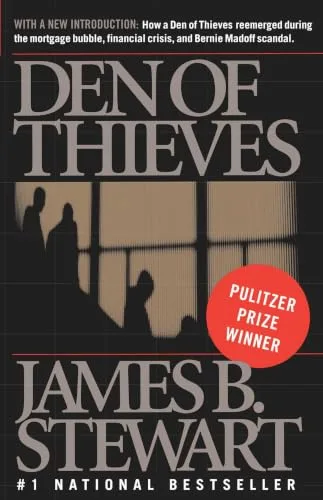
Critics compared it to James B. Stewart's Den of Thieves. Jennifer Senior in The New York Times likened it to Moby-Dick with wiretaps, The New York Times and The Economist named it a book of the year, and it was longlisted for the FT and McKinsey Business Book of the Year. Kirkus found the cops-and-robbers structure formulaic and less stylish than Michael Lewis. The ending is unsettling by design: SAC pleaded guilty and Cohen kept his fortune.
It is required reading for anyone joining a hedge fund, an expert network or a compliance department, and for any investor who wants to understand where research ends and crime begins.
- Know where edge becomes black edge. Material nonpublic information from insiders, doctors or company employees is illegal to trade on, however it is packaged. The mosaic theory protects research, not leaks.
- Incentives create culture. SAC's short leashes and lavish payouts for profitable ideas rewarded people who found illegal shortcuts. Compensation design is a compliance decision.
- Willful blindness protects the top. Prosecutors never proved Cohen knew the source of his managers' tips. Firms can profit from information while leaders keep deniability.
- Commissions buy access. SAC's size as a client bought it favored treatment from brokers and expert networks. Allocators should ask what a manager's information advantage really consists of.
- Enforcement is slow and uneven. The case took seven years, convictions were later narrowed, and the principal kept his fortune. Investors and employees cannot rely on regulators to police a firm's culture.
The narrative alternates between SAC's rise and the investigators closing in, then converges on the Martoma trial and its aftermath.
- The trader. Cohen grows up in Great Neck, discovers a gift for short-term trading, makes his name at Gruntal & Co. and launches SAC Capital in 1992. He builds a culture of heavy turnover, star portfolio managers and relentless demands for edge.
- The machine. SAC grows into a multibillion-dollar firm in Stamford. Its huge commissions buy first looks from brokers, and its analysts cultivate company insiders and expert networks. The line between mosaic research and black edge blurs.
- The hunt. After the Galleon case shows what wiretaps can do, FBI agent B.J. Kang and colleagues turn to SAC's orbit. Cooperators flip and lead investigators to Martoma's 2008 trades in Elan and Wyeth.
- The trials. Prosecutors pressure Martoma to testify against Cohen, but he refuses. He is convicted, as is Michael Steinberg, while Cohen insists he knew nothing.
- The reckoning. SAC pleads guilty and pays a record penalty, and Steinberg's conviction is later undone by an appeals ruling. Cohen settles with the SEC, accepts a temporary ban on managing outside money and reopens as a family office, Point72, still a billionaire.
NEW YORK TIMES BESTSELLER • An essential exposé of our times—a work that reveals the deep rot in our financial system . . . Everyone should read this book.”—David Grann, author of Killers of the Flower Moon ONE OF THE BEST BOOKS OF THE YEAR—The New York Times and The Economist • Finalist for the New York Public Library’s Helen Bernstein Book Award for Excellence in Journalism The hedge fund industry changed Wall Street. Its pioneers didn’t lay railroads, build factories, or invent new technologies. Rather, they made their billions through financial speculation, by placing bets in the market that turned out to be right more often than not. In hedge fund circles, Steven A. Cohen was revered as one of the greatest traders who ever lived. But that image was shattered when his fund, SAC Capital, became the target of a seven-year government investigation. Prosecutors labeled SAC a magnet for market cheaters” whose culture encouraged the relentless pursuit of edge”—and even black edge,” which is inside information—and the firm was ultimately indicted and pleaded guilty to charges related to a vast insider trading scheme. Cohen, himself, however, was never charged. Black Edge is a riveting legal thriller that raises urgent questions about the power and wealth of those who sit at the pinnacle of high finance and how they have reshaped the economy. Longlisted for the Andrew Carnegie Medal for Excellence in Nonfiction and the Financial Times and McKinsey Business Book of the Year Award A modern version of Moby-Dick, with wiretaps rather than harpoons.”—Jennifer Senior, The New York Times If you liked James B. Stewart’s Den of Thieves, Sheelah Kolhatkar’s thrilling Black Edge should be next on your reading list.”—The Wall Street Journal Excellent.”—The Economist A true-life thriller with Shakespearian stakes . . . Her chilling account of a blighted industry is as mesmerizing as a human story as it is as a financial one.”—Fortune A tour de force of groundbreaking reporting and brilliant storytelling.”—Jeffrey Toobin, New York Times bestselling author of American Heiress
Reader reviews
No reviews yet. Join to write the first one.