
Intern Essentials
What to read before your first summer on Wall Street. These are the stories the industry still tells about itself: the bond desk of the 1980s, the leveraged buyout that defined an era, the hedge fund that nearly broke the system, and the 2008 crisis from the trading floor and the Treasury. Read them and the war stories in the elevator will make sense.
-
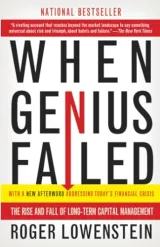 1. When Genius Failed Roger Lowenstein · 2000Essential
The story of Long-Term Capital Management, the Greenwich hedge fund run by John Meriwether's Salomon arbitrageurs and two future Nobel laureates, which lost $4.6 billion in under four months in 1998 and had to be rescued by 14 banks in a deal brokered by the New York Fed. It is the classic lesson in leverage, model risk and crowded trades.
-
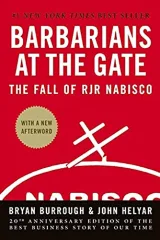 2. Barbarians at the Gate Bryan Burrough and John Helyar · 1990Essential
Two Wall Street Journal reporters reconstruct the 1988 fight for RJR Nabisco, in which CEO Ross Johnson's management buyout set off a six-week bidding war that KKR won with a deal valued at about $25 billion. It remains the definitive account of how leveraged buyouts, boards, bankers and egos actually work.
-
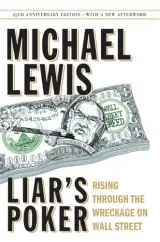 3. Liar's Poker Michael Lewis · 1989Essential
Michael Lewis's account of his years as a bond salesman at Salomon Brothers in the 1980s, combined with a history of how Lewis Ranieri's mortgage department turned home loans into a bond market. It is the funniest book about Wall Street and still the best introduction to trading-floor culture and to how a dominant firm can lose its way.
-
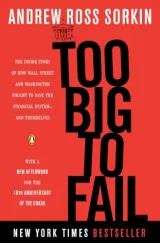 4. Too Big to Fail Andrew Ross Sorkin · 2009Essential
New York Times reporter Andrew Ross Sorkin reconstructs, almost hour by hour, how Hank Paulson, Ben Bernanke, Tim Geithner and the heads of Lehman, Merrill, AIG, Goldman and Morgan Stanley fought through the 2008 crisis. Built on more than 200 interviews, it is the most detailed record of how the system nearly failed and who decided what.
-
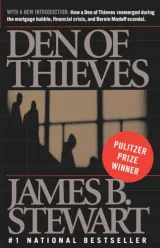 5. Den of Thieves James B. Stewart · 1991Essential
The definitive account of the 1980s insider-trading ring that linked Dennis Levine, Ivan Boesky, Martin Siegel and Michael Milken, and of the investigators who unraveled it. James Stewart's reporting shows how the takeover boom turned confidential deal information into the most valuable commodity on Wall Street, and why compliance rules look the way they do today.
-
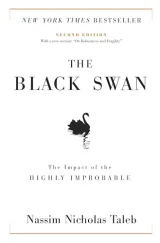 6. The Black Swan Nassim Nicholas Taleb · 2007Essential
Nassim Nicholas Taleb argues that history and markets are driven by rare, extreme events that bell-curve models can't anticipate and that we explain away after the fact. Published in 2007, a year before the financial crisis, it attacks the risk models banks relied on. It will change how you think about forecasting, tail risk and position sizing.
-
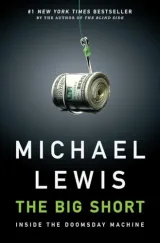 7. The Big Short Michael Lewis · 2010Essential
Michael Lewis tells the subprime crisis through the handful of outsiders who saw it coming and bet against it: Steve Eisman, Michael Burry, the young founders of Cornwall Capital and Deutsche Bank's Greg Lippmann. Funny and precise, it is the best single explanation of how mortgage bonds, CDOs and credit default swaps turned bad loans into a global crash.
-
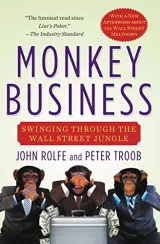 8. Monkey Business John Rolfe and Peter Troob · 2000Recommended
Two MBA graduates, John Rolfe of Wharton and Peter Troob of Harvard, describe their years as junior associates at Donaldson, Lufkin & Jenrette in the 1990s boom: all-nighters, pitch books, abusive deadlines and big bonuses. It is a crude, funny and still accurate picture of what entry-level investment banking asks of people.
-
 9. Outliers Malcolm Gladwell · 2008Recommended
Gladwell argues that extraordinary success owes less to individual genius than to timing, accumulated advantage, practice and inherited culture. The chapter on Joe Flom and the rise of takeover law is a sharp lesson for anyone in finance on how being in the right place when the rules change can build a career.
-
 10. The Intelligent Investor Benjamin Graham · 1949Essential
Benjamin Graham's 1949 guide to investing without losing your shirt: treat stocks as stakes in businesses, demand a margin of safety, and use Mr. Market's mood swings instead of joining them. Warren Buffett calls it the best book on investing ever written, and the current edition pairs Graham's text with Jason Zweig's chapter-by-chapter commentary.
-
 11. A Random Walk Down Wall Street Burton G. Malkiel · 1973Essential
Burton Malkiel's guide, first published in 1973 and now in its 13th edition, argues that markets absorb information so fast that most investors, professionals included, can't reliably beat them. It tours bubbles, technical and fundamental analysis, portfolio theory and behavioral finance, then makes the case for saving steadily in low-cost, diversified index funds.
-
 12. The Essays of Warren Buffett Warren Buffett and Lawrence A. Cunningham · 1997Essential
Warren Buffett's letters to Berkshire Hathaway shareholders, rearranged by law professor Lawrence Cunningham into chapters on governance, investing, acquisitions, valuation, accounting and taxes. It is the most efficient way to absorb Buffett's thinking on intrinsic value, capital allocation and honest reporting, and, by its publisher's account, the book Buffett autographs most.