
Doers & Authors
Books by people who made their names in markets and business before they wrote a word: Warren Buffett and Charlie Munger, Peter Lynch, Seth Klarman, Howard Marks, Ray Dalio, Joel Greenblatt, George Soros and others. Read them for how the people who did it actually think, not how commentators say they think.
-
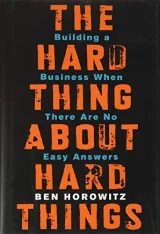 1. The Hard Thing About Hard Things Ben Horowitz · 2014Essential
Ben Horowitz's account of keeping Loudcloud alive through the dot-com crash, selling its services arm to EDS and rebuilding it as Opsware, which HP bought for $1.6 billion in 2007. It's a manual for the parts of running a company that MBA courses skip: layoffs, firing executives, wartime leadership and deciding whether to sell.
-
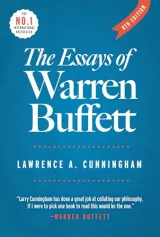 2. The Essays of Warren Buffett Warren Buffett and Lawrence A. Cunningham · 1997Essential
Warren Buffett's letters to Berkshire Hathaway shareholders, rearranged by law professor Lawrence Cunningham into chapters on governance, investing, acquisitions, valuation, accounting and taxes. It is the most efficient way to absorb Buffett's thinking on intrinsic value, capital allocation and honest reporting, and, by its publisher's account, the book Buffett autographs most.
-
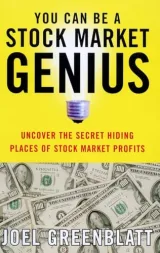 3. You Can Be a Stock Market Genius Joel Greenblatt · 1997Essential
Hedge fund manager Joel Greenblatt explains the special-situation investing that earned Gotham Capital about 50 percent a year before fees from 1985 to 1994: spinoffs, merger securities, bankruptcies, recapitalizations, stub stocks and LEAPS. Despite the joke title, it is one of the most practical books on finding mispriced securities where institutions are not looking.
-
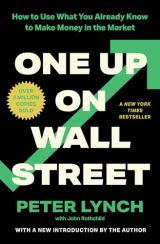 4. One Up On Wall Street Peter Lynch and John Rothchild · 1989Essential
Peter Lynch ran Fidelity's Magellan Fund from 1977 to 1990, averaging about 29 percent a year as it grew from $18 million to more than $14 billion. Here he explains how individual investors can find tenbaggers by noticing good businesses in daily life and then doing the homework: sorting companies into types, checking the numbers and holding on.
-
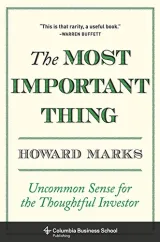 5. The Most Important Thing Howard Marks · 2011Essential
Oaktree Capital co-founder Howard Marks distills decades of client memos into 20 short chapters on how to think about value, risk, cycles and investor psychology. Warren Buffett called it that rarity, a useful book. For anyone who manages money, it is the clearest modern statement of how a disciplined contrarian investor thinks about risk.
-
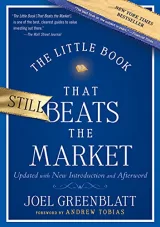 6. The Little Book That Still Beats the Market Joel Greenblatt · 2010Highly recommended
Joel Greenblatt's short, plain-English case for buying good businesses at bargain prices, reduced to a ranking of companies by return on capital and earnings yield that he calls the magic formula. The 2010 edition updates the 2005 bestseller with results through the financial crisis, and remains the clearest introduction to systematic value investing.
-
 7. Poor Charlie's Almanack Charles T. Munger · 2005Essential
Eleven talks by Charlie Munger, Warren Buffett's partner and Berkshire Hathaway's vice chairman, compiled by Peter Kaufman and named for Benjamin Franklin's almanac. It includes his worldly-wisdom lectures on mental models and his talk on the psychology of human misjudgment. The fullest record of how one of the great investors thought about business, incentives and error.
-
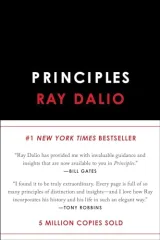 8. Principles Ray Dalio · 2017Highly recommended
Bridgewater founder Ray Dalio sets out the rules he used to build the world's biggest hedge fund, drawing on the 1982 call that nearly broke him. Part memoir, part operating manual, it explains radical transparency, believability-weighted decisions and his habit of turning mistakes into written rules, ideas that are widely debated across the investment industry.
-
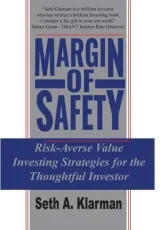 9. Margin of Safety Seth A. Klarman · 1991Essential
Baupost founder Seth Klarman's only book, and the best modern statement of value investing as a discipline of avoiding loss. He shows why Wall Street and institutional money managers work against their clients, how to value a business conservatively, and where bargains hide, from spinoffs to bankrupt debt. Long out of print, it remains one of the most sought-after investing books.
-
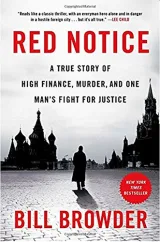 10. Red Notice Bill Browder · 2015
Bill Browder built Hermitage Capital into one of the largest foreign investors in Russia by buying cheap privatized shares and fighting corrupt managers, until the Kremlin expelled him, seized his companies and imprisoned his lawyer Sergei Magnitsky, who died in custody. Part investing memoir, part thriller, it is a sharp lesson in emerging-market and political risk.
-
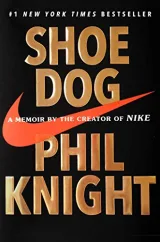 11. Shoe Dog Phil Knight · 2016Recommended
Nike founder Phil Knight's memoir covers the 18 years between a Stanford term paper about Japanese running shoes and Nike's 1980 IPO. For finance readers it is one of the most honest accounts of what it means to run a fast-growing company short of cash: bankers cutting off credit, a supplier turning rival, and a customs bill that could have ended it all.
-
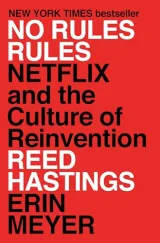 12. No Rules Rules Reed Hastings and Erin Meyer · 2020Highly recommended
Netflix cofounder Reed Hastings and INSEAD professor Erin Meyer lay out the operating system behind the company: hire and pay for top talent, demand constant candor, then strip away controls such as vacation and expense approvals. A first-hand guide to how culture, not process, let Netflix move from mailing DVDs to streaming to producing its own shows.
-
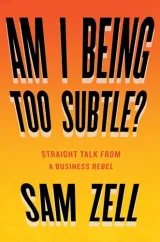 13. Am I Being Too Subtle? Sam Zell · 2017Highly recommended
Sam Zell's blunt memoir of five decades buying what others were dumping: distressed property after the 1970s bust, rail cars, manufactured home communities, and the office empire he sold for $39 billion in 2007. It is a working lesson in downside analysis, replacement cost and contrarian timing, and it does not dodge the Tribune deal that went bankrupt.
-
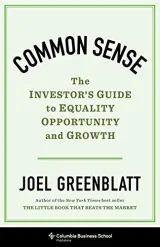 14. Common Sense Joel Greenblatt · 2020
Gotham Capital founder Joel Greenblatt turns from stock picking to public policy, proposing practical fixes for schools, low wages, immigration, bank regulation and retirement saving. It is a short, opinionated policy book, not an investing manual, and it shows how a value investor reasons about costs, incentives and returns when the asset is a country.
-
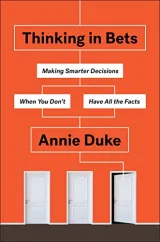 15. Thinking in Bets Annie Duke · 2018Highly recommended
Former professional poker player Annie Duke argues that life is poker, not chess: every decision is a bet made with incomplete information and some luck. Her central warning, against resulting, or judging decisions by their outcomes, is exactly the discipline investors need when a good process produces a bad quarter.
-
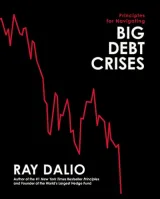 16. Principles for Navigating Big Debt Crises Ray Dalio · 2018Essential
Bridgewater founder Ray Dalio sets out the template his firm used to read the 2008 crisis: a step-by-step model of how big debt cycles build, break and are resolved, tested against 48 crises from the past century. It is a working manual for anyone who has to position a portfolio, or a policy, when leverage turns.
-
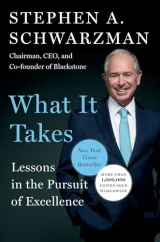 17. What It Takes Stephen A. Schwarzman · 2019Essential
Blackstone's co-founder tells how he and Pete Peterson turned $400,000 in 1985 into the world's largest alternative asset manager, and what he learned about deals, risk and building a firm along the way. It is a founder's view of how modern private equity and real estate investing were built, from a hard first fundraise to the 2007 IPO.
-
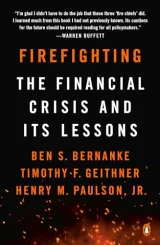 18. Firefighting Ben S. Bernanke, Timothy F. Geithner, and Henry M. Paulson Jr. · 2019Highly recommended
The Fed chairman, the New York Fed president and the Treasury secretary who ran the 2008 rescue look back together, ten years on, at why the crisis happened, what stopped it, and which emergency tools the next crisis-fighters will be missing. It is the shortest serious account of the crisis from the people who made the calls, with a long appendix of charts.
-
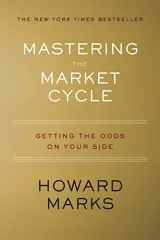 19. Mastering the Market Cycle Howard Marks · 2018Essential
Oaktree co-founder Howard Marks argues that nobody can forecast the market, but a disciplined investor can judge where we stand in the cycle and tilt the odds. He takes apart the economic, profit, credit, distressed debt and real estate cycles and shows how investor psychology links them, which is the kind of judgment that separates good credit and value investors from the rest.
-
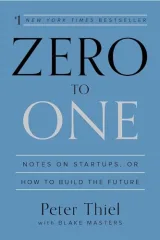 20. Zero to One Peter Thiel and Blake Masters · 2014Highly recommended
PayPal co-founder and early Facebook investor Peter Thiel argues that real value comes from building something new, not copying what works, and that the best businesses escape competition to become monopolies. Built from his 2012 Stanford startup class, it is a short, contrarian guide to how venture investors think about moats, power laws and founders.
-
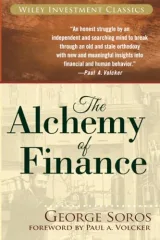 21. The Alchemy of Finance George Soros · 1987Recommended
George Soros sets out his theory of reflexivity, the feedback loop between what market participants believe and what actually happens, and then tests it in public with a trading diary of his Quantum Fund from August 1985 to November 1986. It is the closest thing to a manual from one of the great macro speculators, and still the standard text on boom-bust dynamics.
-
 22. The New Paradigm for Financial Markets George Soros · 2008Recommended
George Soros wrote this short book in early 2008, months before Lehman failed, to argue that the subprime bust was only the trigger for the unwinding of a 25-year credit super-bubble. It is the clearest statement of his theory of reflexivity applied to a live crisis, and a useful test of how a famous macro investor reads markets in real time.
-
 23. Soros on Soros George Soros, Byron Wien, and Krisztina Koenen · 1995
A book-length interview in which George Soros, then running the Quantum Fund, explains his theory of reflexivity, his 1992 bet against sterling, his costly yen trade and his philanthropy in the former Soviet bloc. It is the most direct look at how the most famous macro trader of his era thought, told in his own words and on his own terms.
-
 24. How to Invest David M. Rubenstein · 2022Essential
The Carlyle Group cofounder interviews 23 leading investors, among them Stan Druckenmiller, Seth Klarman, Larry Fink, Sam Zell, Mary Callahan Erdoes and Mike Novogratz, and arranges the conversations by asset class, from public stocks and real estate to buyouts, distressed debt, venture, crypto, SPACs and infrastructure. It is a guided tour of how professionals in each corner of the market think.
-
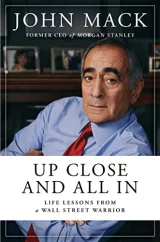 25. Up Close and All In John Mack · 2022Highly recommended
The former Morgan Stanley CEO tells his own story, from a North Carolina mill town to the bond desk, the Dean Witter merger, his ouster by Phil Purcell, Credit Suisse First Boston, and the September 2008 run that nearly sank Morgan Stanley. It is a candid look at how a Wall Street firm is run, and how its leader manages people under pressure.
-
 26. The Missing Billionaires Victor Haghani and James White · 2023Highly recommended
Two former arbitrage traders, one of them a Long-Term Capital Management co-founder, argue that the costliest investing mistake is not what you buy but how much. Bad sizing of risk and spending, they show, explains why old fortunes vanished. A rigorous, practical guide to the Merton share, Kelly betting and expected utility.
-
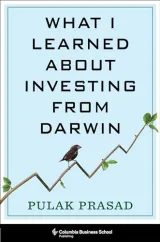 27. What I Learned About Investing from Darwin Pulak Prasad · 2023Recommended
The founder of Nalanda Capital, which manages about $5 billion in listed Indian stocks, uses evolutionary biology to argue for a very patient strategy: avoid big risks, buy high-quality businesses at fair prices and then hold them almost forever. It is a quality-investing manual built on foxes, frogs and sea urchins instead of spreadsheets.
-
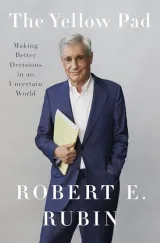 28. The Yellow Pad Robert E. Rubin · 2023
The former Goldman Sachs co-senior partner and Treasury secretary explains the probabilistic method he has used for six decades: write down the possible outcomes, assign odds, and choose on expected value. Part decision manual and part memoir, it shows how a risk arbitrageur's habits carried over to crisis management in Washington.
-
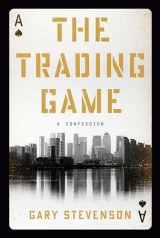 29. The Trading Game Gary Stevenson · 2024Highly recommended
A working-class kid from East London wins a Citibank card-game competition, lands on a short-term interest rate desk in 2008 and makes his name betting that rates would stay pinned near zero. The memoir shows how a bank trading desk actually earns its money, and what it costs the people who sit there.
-
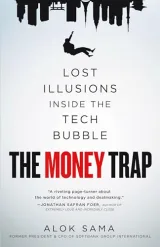 30. The Money Trap Alok Sama · 2024Recommended
A longtime Morgan Stanley banker who became SoftBank's chief dealmaker and a top adviser to Masayoshi Son recounts the tech-bubble deals, the boardroom rivalries and a covert smear campaign that drove him out. It gives an insider's view of how mega-deals get done and argues that more money does not buy more control.
-
 31. How Countries Go Broke Ray Dalio · 2025Recommended
Bridgewater's founder sets out his model of the big debt cycle, the decades-long build-up of government debt that ends when a country must choose between painful restructuring and printing money, and argues the United States is close to that point. Read it for the framework and the long-run data, and read the critics on its determinism and missing citations.
-
 32. How Not to Invest Barry Ritholtz · 2025Recommended
Ritholtz has run money and written about markets for more than two decades, and he hosts Bloomberg's Masters in Business. Here he lists the mistakes that cost investors the most, sorted into bad ideas, bad numbers and bad behavior. His case is that avoiding unforced errors beats chasing brilliance, and the advice on forecasting, yield-chasing and concentrated stock positions applies to professionals as much as to savers.
-
 33. The Black Swan Nassim Nicholas Taleb · 2007Essential
Nassim Nicholas Taleb argues that history and markets are driven by rare, extreme events that bell-curve models can't anticipate and that we explain away after the fact. Published in 2007, a year before the financial crisis, it attacks the risk models banks relied on. It will change how you think about forecasting, tail risk and position sizing.
-
 34. Fooled by Randomness Nassim Nicholas Taleb · 2001Highly recommended
Nassim Nicholas Taleb's first popular book, written while he was still trading options, argues that luck routinely passes for skill in markets and in life. Through traders who blow up, survivorship bias and skewed bets that win often but lose big, it shows why track records mislead. It lays the groundwork for The Black Swan and reads as a field guide for judging any performance record.
-
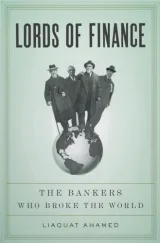 35. Lords of Finance Liaquat Ahamed · 2009
A Pulitzer Prize-winning history of the four central bankers who ran the world's money between the two world wars, and of how their loyalty to the gold standard turned a 1929 stock crash into a global depression. It is the best narrative introduction to how monetary policy, war debts and capital flows can break an economy.
-
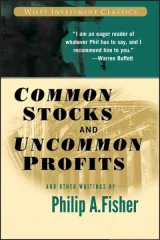 36. Common Stocks and Uncommon Profits and Other Writings Philip A. Fisher · 1958Recommended
Philip Fisher's 1958 classic laid out the growth investor's method: find a few outstanding companies through relentless 'scuttlebutt' research, judge them on fifteen points about products, margins and management, buy them sensibly and almost never sell. Warren Buffett credits it alongside Graham, and its checklist still reads like a modern analyst's playbook.
-
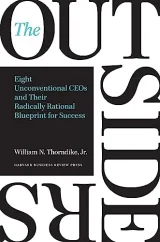 37. The Outsiders William N. Thorndike Jr. · 2012
Profiles of eight CEOs, among them Henry Singleton, Tom Murphy, John Malone, Katharine Graham and Warren Buffett, whose shareholder returns far outstripped the market because they treated capital allocation as their main job. Investor William Thorndike shows how buybacks, disciplined acquisitions, decentralization and indifference to Wall Street's opinion compounded value over decades.
-
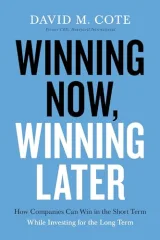 38. Winning Now, Winning Later David M. Cote · 2020Recommended
The former Honeywell chief executive explains how he hit quarterly numbers while still funding the investments that paid off years later. Cote's case against short-termism comes from running a large industrial company through a turnaround and the 2008-09 recession, which makes it useful for investors judging how management allocates money and effort.
-
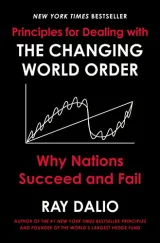 39. Principles for Dealing with the Changing World Order Ray Dalio · 2021Essential
Bridgewater founder Ray Dalio studies five centuries of rising and falling empires, including the Dutch, the British, the Americans and now the Chinese. He argues that debt, money printing, internal conflict and great-power rivalry move in a long, repeating cycle. This is his macro investor's framework for reading the 2020s and positioning a portfolio for a shift in reserve-currency power.
-
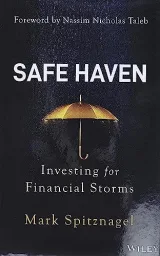 40. Safe Haven Mark Spitznagel · 2021
Universa Investments founder Mark Spitznagel argues that a hedge is worth owning only if it raises a portfolio's compound growth rate, not just its comfort. Using Bernoulli's math, simple wagers and bootstrapped S&P 500 returns, he tests bonds, gold, trend following and tail insurance, and finds most popular safe havens too expensive to hold.