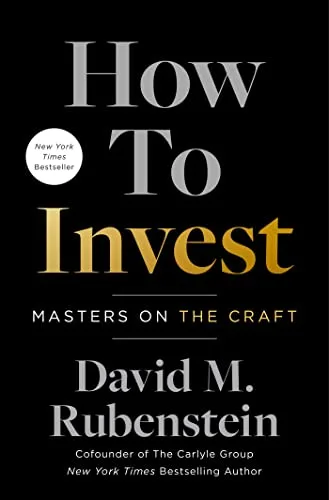
How to Invest
Masters on the Craft
- Published
- 2022
- Pages
- 416 pages
- Publisher
- Simon & Schuster
- Readers
- 6 members have read this
The Carlyle Group cofounder interviews 23 leading investors, among them Stan Druckenmiller, Seth Klarman, Larry Fink, Sam Zell, Mary Callahan Erdoes and Mike Novogratz, and arranges the conversations by asset class, from public stocks and real estate to buyouts, distressed debt, venture, crypto, SPACs and infrastructure. It is a guided tour of how professionals in each corner of the market think.
David Rubenstein built the book the way he built his television interviews: short, direct questions to people at the top of their fields, edited into chapters that each cover one part of the investment world. He sets out his own views first, then moves from public stocks and real estate to private equity, distressed debt and venture capital, and finally to crypto, SPACs and infrastructure.
Rubenstein cofounded The Carlyle Group, one of the world's largest private equity firms, and has interviewed business leaders for years on Bloomberg Television. His earlier book, How to Lead, used the same format with CEOs and public figures. Here the interviewees include Druckenmiller, Zell, Novogratz, BlackRock's Fink and Erdoes, who runs J.P. Morgan's asset and wealth management business.
The strength is range. Few books let a reader hear an endowment chief, a distressed-debt specialist and a venture capitalist explain their work in the same voice and level of detail. Rubenstein also distills the common traits he saw: many came from modest backgrounds, had failed and recovered, and read widely. Publishers Weekly found the advice level-headed and free of hard selling but said some conversations get a bit dry. The Q&A format also means interviewees tell their own stories with little pushback.
It works as a survey course for students, junior analysts and anyone deciding which part of finance to work in.
- Each asset class is its own craft. A buyout investor, a distressed-debt specialist and a venture capitalist need different skills, time horizons and temperaments. Knowing which suits you matters as much as knowing which pays.
- Failure is part of the résumé. Rubenstein found that many of his interviewees came from modest backgrounds and had failed along the way. Setbacks did not keep them out of the top tier.
- Read widely. A habit of reading far outside finance came up again and again as a source of ideas and judgment.
- Don't extrapolate the present. Fink's caution that conditions in seven years will differ from today's is a reminder to stress-test any plan built on current rates and valuations.
- New markets need old discipline. Crypto, SPACs and infrastructure attract capital fast, but the same questions about cash flows, incentives and risk still apply.
The book opens with an introduction and Rubenstein's own notes on investing, then works through the asset classes in three broad groups, one chapter per area with interviews in each.
- Rubenstein's notes. He sets out lessons from his own career and the traits he saw in the best investors: often modest beginnings, early failures, intelligence and wide reading.
- Mainstream investments. After an overview, chapters on public equities, real estate, private wealth and family offices, and endowments feature the investors and allocators who run that money.
- Alternative investments. An overview of alternatives is followed by chapters on private equity and buyouts, distressed debt and venture capital, each explaining how the strategy finds its returns and what can go wrong.
- Newer asset classes. A section on newer investments, including crypto, is followed by chapters on SPACs and infrastructure, areas drawing large sums of new money when the book came out in 2022. Some of the SPAC and crypto enthusiasm reads differently after the 2022 market slump, which is itself a lesson in how fast these areas change.
NEW YORK TIMES BESTSELLER A master class on investing featuring conversations with the biggest names in finance, from the legendary cofounder of The Carlyle Group, David M. Rubenstein. What do the most successful investors have in common? David M. Rubenstein, cofounder of one of the world’s largest investment firms, has spent years interviewing the greatest investors in the world to discover the time-tested principles, hard-earned wisdom, and indispensable tools that guide their practice.? Rubenstein, who has spent more than three decades in the hypercompetitive world of private equity, now distills everything he’s learned about the art and craft of investing, from venture capital, real estate, private equity, hedge funds, to crypto, endowments, SPACs, ESG, and more. -How did Stan Druckenmiller short the British pound in one trade for a profit of $1 billion dollars? -What made Sam Zell the smartest, toughest investor the world of real estate has ever seen? -How did Mike Novogratz make $250 million off crypto in one year? -How did Larry Fink build BlackRock from scratch into a firm that manages more than $10 trillion? -How did Mary Callahan Erdoes rise to the top of J.P. Morgan’s wealth management division to manage more than $4 trillion for individuals and families all over the world? -How did Seth Klarman perfect value investing to consistently deliver net returns of nearly 20 percent? With unprecedented access to global leaders in finance, Rubenstein has assembled the most authoritative book of its kind. How to Invest reveals the thinking of the most successful investors in the world, many of whom rarely speak publicly. Whether you’re brand-new to investing or a seasoned professional, this book will transform the way you approach investing forever.
Reader reviews
No reviews yet. Join to write the first one.