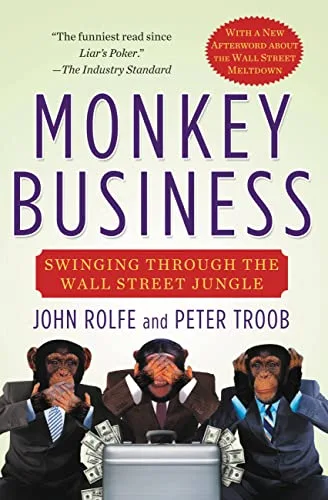
Monkey Business
Swinging Through the Wall Street Jungle
by John Rolfe and Peter Troob
- Published
- 2000
- Pages
- 288 pages
- Publisher
- Grand Central Publishing
- Readers
- 9 members have read this
Two MBA graduates, John Rolfe of Wharton and Peter Troob of Harvard, describe their years as junior associates at Donaldson, Lufkin & Jenrette in the 1990s boom: all-nighters, pitch books, abusive deadlines and big bonuses. It is a crude, funny and still accurate picture of what entry-level investment banking asks of people.
Rolfe and Troob joined Donaldson, Lufkin & Jenrette, then one of Wall Street's most aggressive investment banks, straight out of business school, expecting money, glamour and power. What they found was grunt work: building models and pitch books through the night for senior bankers who set impossible deadlines. The title reflects how they came to see themselves, as monkeys doing the work no one senior wanted to do.
The authors write as insiders who got out. Rolfe went to an investment fund and later co-founded an equity money management firm; Troob moved into distressed debt investing and co-founded a debt-focused firm. At business school Rolfe edited the Wharton Vulgarian and Troob was humor editor of the Harbus, and the book reads that way, with long stretches of locker-room comedy.
Publishers Weekly pitched it at fans of Liar's Poker and found its account of an associate's daily routine sobering, but criticized its scattershot resentment, including demeaning jokes at the expense of support staff and female analysts, and found the pranks juvenile. Readers should expect the tone of a late-1990s banking floor, not a careful analysis of the industry. It is narrower than Liar's Poker, which is about trading and a whole firm's culture, and more candid about the daily grind.
It remains popular with students weighing a banking career because the basic bargain it describes, extreme hours for high pay and a possible exit to the buy side, has changed less than the technology.
- Junior bankers sell their time. The pay is high because the hours are extreme and unpredictable; know that before you accept the offer.
- The pitch book is the job. Much of an associate's work goes into marketing materials and models for deals that may never happen.
- Bonuses keep people in place. The annual payout is designed to make leaving expensive, which is why many stay longer than they planned.
- Culture comes from the top. Senior bankers' habits, from surprise deadlines to endless revisions, set the conditions for everyone below them.
- Plan the exit. Both authors used banking as a route to the buy side, a path many juniors still follow.
The book follows the authors' banking careers from recruitment to resignation.
- Getting in. Rolfe and Troob describe business school recruiting, the courting by banks, and why DLJ's culture and pay drew them.
- Learning the job. As new associates they learn the real work of corporate finance: spreadsheets, comparable-company analysis and endless revisions to pitch books.
- Life in the jungle. The middle of the book catalogs the hours, the canceled weekends, the demands of senior bankers and the steady erosion of their lives outside work. Their resentment comes out in pranks and small acts of protest, including a notorious scene at the firm's Christmas party.
- Deals and money. They describe working on transactions in the boom and the bonus season that keeps junior bankers in place, along with the realization that a handful of firms control the biggest deals.
- Getting out. Disillusioned, each eventually leaves banking for the investment side of the business.
Animal House meets Liar's Poker in this hysterically funny, often unbelievable, and absolutely, positively true account of life at DLJ, one of the hottest investment banks on Wall Street.
Reader reviews
No reviews yet. Join to write the first one.