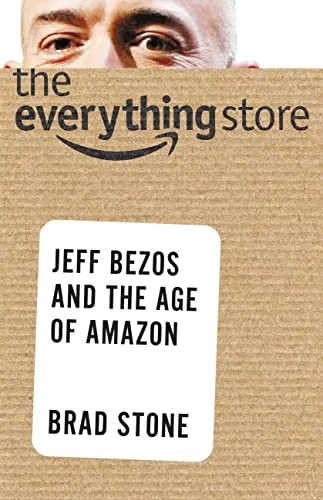
The Everything Store
Jeff Bezos and the Age of Amazon
by Brad Stone
- Published
- 2013
- Pages
- 384 pages
- Publisher
- Little, Brown and Company
- Readers
- 2 members have read this
Bloomberg Businessweek's Brad Stone tells how Jeff Bezos left the hedge fund D. E. Shaw to sell books online and built Amazon into a retailer, logistics network and cloud computing giant. Winner of the 2013 Financial Times and Goldman Sachs Business Book of the Year award, it shows how a company that long ran near breakeven used cash flow and patience to dominate retail.
Brad Stone covered Amazon for more than a decade at Newsweek, The New York Times and Bloomberg Businessweek before writing this history. He drew on access to many current and former Amazon executives and to Bezos's parents and friends, though he had only limited interaction with Bezos himself.
Its central figure is Bezos: demanding, frugal, fixated on customers and long-term growth, and capable of withering scorn toward employees. Michiko Kakutani in The New York Times praised the reporting and called it a dynamic portrait of a driven, demanding chief executive. Kirkus found it fair-minded and singled out its account of how the Kindle disrupted publishing. It won the 2013 Financial Times and Goldman Sachs Business Book of the Year award.
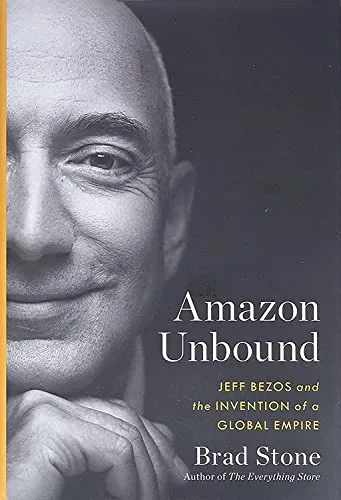
The book was not universally welcomed. MacKenzie Bezos, then Jeff's wife, posted a one-star Amazon review claiming many inaccuracies, though she identified only one specific error. Stone's sequel, Amazon Unbound (2021), carries the story forward.
For investors, the lesson is in how Amazon treated free cash flow, not reported earnings, as the measure that mattered, and how it kept reinvesting while Wall Street doubted it.
- Free cash flow over earnings. Amazon optimized for long-term cash generation and reinvestment rather than quarterly profits, and patient investors were rewarded.
- Obsess over the customer. Low prices, wide selection and fast delivery were treated as permanent priorities, and Bezos used customer complaints to hold executives accountable.
- Infrastructure can become a business. Amazon turned the computing systems it built for itself into Amazon Web Services, a major profit engine.
- Willingness to cannibalize. The Kindle threatened Amazon's own physical book sales, but Bezos backed it on the view that someone else would disrupt the business if Amazon did not.
- Culture is a competitive weapon. Frugality, written narratives instead of slide decks and relentless standards gave Amazon speed, but at a cost to employees and partners that the book does not hide.
A prologue sets up Bezos's management style; the history then runs in three chronological parts, followed by an appendix of the books that shaped Bezos's thinking.
- Faith. Bezos works at D. E. Shaw, the quantitative hedge fund, where the idea of an everything store takes shape. He leaves in 1994, starts Amazon in Seattle as an online bookstore and expands furiously through the dot-com boom. Then the 2000 crash brings warnings that Amazon could run out of cash, and the company fights to cut costs and survive.
- Literary influences. Stone steps back to Bezos's childhood and family, including the biological father he tracked down. He then shows Amazon rebuilding its fulfillment network, recasting itself as a technology company rather than a retailer, which produced Amazon Web Services, and developing the Kindle under the code name Fiona.
- Missionary or mercenary? The final part covers the Kindle era and Amazon's long conflict with book publishers, its aggressive tactics toward rivals such as Zappos and Diapers.com, and its battles over sales tax. It ends with Bezos's habit of forwarding customer complaints to executives with a single question mark.
The authoritative account of the rise of Amazon and its intensely driven founder, Jeff Bezos, praised by the Seattle Times as the definitive account of how a tech icon came to life. Amazon.com started off delivering books through the mail. But its visionary founder, Jeff Bezos, wasn't content with being a bookseller. He wanted Amazon to become the everything store, offering limitless selection and seductive convenience at disruptively low prices. To do so, he developed a corporate culture of relentless ambition and secrecy that's never been cracked. Until now. Brad Stone enjoyed unprecedented access to current and former Amazon employees and Bezos family members, giving readers the first in-depth, fly-on-the-wall account of life at Amazon. Compared to tech's other elite innovators -- Jobs, Gates, Zuckerberg -- Bezos is a private man. But he stands out for his restless pursuit of new markets, leading Amazon into risky new ventures like the Kindle and cloud computing, and transforming retail in the same way Henry Ford revolutionized manufacturing. The Everything Store is the revealing, definitive biography of the company that placed one of the first and largest bets on the Internet and forever changed the way we shop and read.
Reader reviews
No reviews yet. Join to write the first one.