The Selfish Gene
- Published
- 1976
- Pages
- 544 pages
- Publisher
- Oxford University Press
- Readers
- 2 members have read this
Richard Dawkins's 1976 classic argues that natural selection works on genes, and that bodies are vehicles genes build to copy themselves. It is not a finance book, but its chapters on game theory, evolutionarily stable strategies and how cooperation beats cheating in repeated games are some of the clearest writing on strategic behavior anywhere.
Richard Dawkins was a young Oxford zoologist when The Selfish Gene appeared in 1976. The book popularized the gene's-eye view of evolution that W. D. Hamilton, George Williams, Robert Trivers and John Maynard Smith had developed: the unit that natural selection favors is the gene, and organisms are the survival machines genes build. The word selfish is a metaphor for what gets copied, not a claim about motives, and much of the book is about explaining altruism.
It works as both science and popular writing. Hamilton, reviewing it in Science, said almost anyone could read it, and Matt Ridley later wrote in Nature that it changed the science while reaching a mass audience. Critics such as Stephen Jay Gould objected to treating genes as the unit of selection, and others argued that the selfish metaphor misleads readers.
For a finance reader, the payoff is in the strategic chapters on the hawk-dove game and the repeated prisoner's dilemma, which the simple tit-for-tat strategy won. Both are vivid introductions to game theory and repeated dealings, which apply to trading relationships, negotiation and market competition. The chapter that coined the word meme offers a way to think about how ideas and narratives spread.
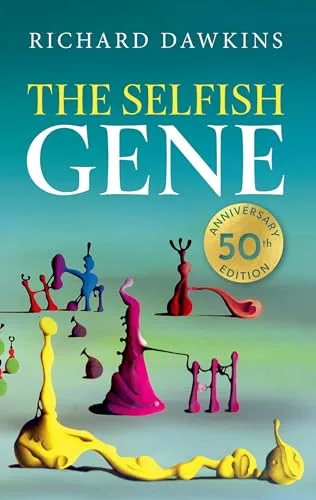
Read it for the thinking, not for investment advice. The 50th anniversary edition (2026) adds a new epilogue and appendix.
- Ask what is being selected. Dawkins's habit of asking which unit benefits from a behavior is a useful lens for any system, including firms, funds and incentive schemes.
- Stable strategies depend on the mix of players. The hawk-dove game shows that the best strategy depends on what everyone else is doing, much as a trading strategy's payoff depends on how crowded it is.
- Repeated games reward cooperation. In the prisoner's dilemma tournaments, nice, retaliatory and forgiving strategies such as tit for tat did best, a lesson about reputation in long-running business relationships.
- Altruism can be explained without sentiment. Kin selection and reciprocal altruism show how apparently generous behavior can follow from self-interest over time.
- Ideas replicate too. The meme concept is a framework for thinking about how narratives, fads and market beliefs spread regardless of whether they are true.
The original eleven chapters build the gene's-eye view step by step, and the 1989 edition added two more chapters and extensive endnotes.
- Replicators and survival machines. Dawkins asks why people exist, imagines the first self-copying molecules in the primeval soup and argues that genes, not individuals or groups, are the units that natural selection preserves.
- Strategy and stability. The chapter on aggression introduces Maynard Smith's evolutionarily stable strategies through games such as hawk versus dove, after a chapter on bodies as gene machines.
- Family and kin. Using Hamilton's kin selection, he explains parental care, family size, conflict between parents and offspring, and the differing interests of the sexes.
- Cooperation. A chapter on reciprocal altruism, grooming and the social insects shows how helping others can serve a gene's interest.
- Memes. He proposes that cultural ideas spread and compete as replicators of their own.
- The 1989 additions. Nice Guys Finish First covers prisoner's dilemma tournaments and the success of tit for tat, and The Long Reach of the Gene summarizes his argument for the extended phenotype.
Reader reviews
No reviews yet. Join to write the first one.