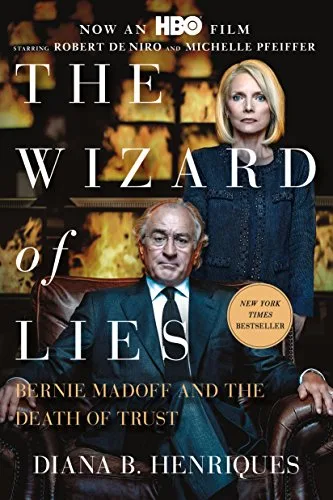
The Wizard of Lies
Bernie Madoff and the Death of Trust
- Published
- 2011
- Pages
- 464 pages
- Publisher
- St. Martin's Press
- Readers
- 2 members have read this
The New York Times reporter who led the paper's Madoff coverage tells how Bernie Madoff built a respected trading firm, ran a Ponzi scheme for decades and lost his victims about $65 billion on paper. Drawing on prison interviews with Madoff and more than 100 sources, it is the standard account of the fraud, the feeder funds and regulators who missed it, and the legal fight over who pays.
Diana Henriques covered the Madoff story for The New York Times from the day it broke, and she was the first writer to interview Madoff in prison. Her book draws on those interviews, on more than one hundred others with people on every side of the case, and on the lawsuits, court filings and government investigations that followed.
Henriques had been covering Wall Street for decades before Madoff. She joined the Times in 1989 after working at Barron's, was part of the Times teams honored for coverage of Long-Term Capital Management, Enron and the 2008 crisis, and had already written books on Fidelity and corporate raiders. That background shows in how clearly she explains the mechanics: Madoff's legitimate market-making business, the strategy he claimed to run and the feeder funds that sent him money.
What sets the book apart is its breadth. It covers not just Madoff but the investors who wanted to believe him, the warnings the SEC failed to act on, the bankruptcy trustee's battle to claw back money from net winners, and the cost to his family. Madoff's prison interviews add his own version of events, which readers should weigh against the documentary record the book lays out.
The book became the basis for HBO's 2017 film, with Robert De Niro as Madoff. Anyone doing manager due diligence, compliance or fund operations should read it.
- Consistency is a red flag. Madoff's returns were too smooth for the strategy he claimed to run. Steady numbers that never vary with markets demand an explanation.
- Verify custody and counterparties. Madoff acted as his own broker and custodian and used a tiny audit firm. Independent custody and a credible auditor are basic protections.
- Feeder funds outsource diligence. Many investors relied on intermediaries who collected fees without checking the underlying manager. Know who actually holds your money.
- Regulators can miss the obvious. The SEC received credible warnings and did not act. Never treat registration as proof of legitimacy.
- Ponzi losses spread unevenly. Clawback fights between net winners and net losers show that a fraud's damage continues for years after it collapses.
The book opens with the week of Madoff's confession and arrest, then goes back to trace his rise before following the aftermath.
- Becoming Bernie. Madoff builds a small trading firm into a leading market maker and a respected Wall Street figure, while an investment advisory business grows quietly beside it.
- The money machine. Investors hungry for steady returns, a handful of wealthy early backers and a network of feeder funds pour money into the scheme. Henriques shows why sophisticated investors wanted to believe in his consistency.
- Warnings and near misses. Red flags pile up, including a close call with regulators and repeated outside warnings that the SEC fails to pursue. The 2008 financial crisis then brings redemption requests he cannot meet.
- Collapse. Madoff confesses to his sons, is arrested, pleads guilty and is sentenced. Henriques reconstructs the fraud and the scale of the paper losses.
- Reckoning. The trustee for Madoff's firm sorts victims into net winners and net losers and sues to recover money, charities and families are ruined, and Madoff's family is torn apart. An epilogue weighs what the scandal says about trust in markets.
Who was Bernie Madoff, and how did he pull off the biggest Ponzi scheme in history?
This question has long fascinated people, about the New York financier who swindled his friends, relatives, and other investors out of $65 billion. And in The Wizard of Lies, Diana B. Henriques of the New York Times has written the definitive and bestselling account of the man and his scheme, drawing on unprecedented access and more than one hundred interviews, including Madoff’s first interviews for publication following his arrest. Henriques provides vivid details from the lawsuits and government investigations that explode the myths that have come to surround the story, and in a revised and expanded epilogue, she unravels the latest legal developments.
A true-life financial thriller―and now a major HBO film starring Robert De Niro and Michelle Pfeiffer―The Wizard of Lies contrasts Madoff’s remarkable rise on Wall Street with dramatic scenes from his accelerating slide toward self-destruction. It is also the most complete account of the heartbreaking personal disasters and landmark legal battles triggered by Madoff’s downfall―the suicides, business failures, fractured families, shuttered charities―and the clear lessons this timeless scandal offers to Washington, Wall Street, and Main Street.
Reader reviews
No reviews yet. Join to write the first one.