
2025 Wall Street Reading List
2025 WSRL
The best books on Wall Street, investing and markets published in 2025. Andrew Ross Sorkin's account of the 1929 crash leads a year dominated by money's big questions: the future of the dollar, land as the asset behind every credit boom, sovereign debt cycles, private equity's human cost, and the economics of everyday investing mistakes.
-
 1. 1929 Andrew Ross Sorkin · 2025Highly recommended
Andrew Ross Sorkin spent eight years in the archives to rebuild the 1929 crash scene by scene, through the bankers, speculators and officials who fed a margin-driven boom and then could not stop the fall. For finance readers it is a case study in leverage, conflicted banks and a hesitant central bank, and the lessons carry over to any market that runs on borrowed money.
-
 2. Our Dollar, Your Problem Kenneth Rogoff · 2025Highly recommended
A former IMF chief economist explains how the dollar beat the yen, the ruble and the euro, why its dominance was never guaranteed, and why the biggest threats to it now come from Washington: rising debt, the end of ultra-low rates and pressure on Fed independence. Essential context for anyone who prices Treasuries, currencies or reserve assets.
-
 3. The Land Trap Mike Bird · 2025Highly recommended
The Economist's Wall Street editor argues that land, not stocks or factories, sits at the center of modern finance: it is the collateral behind most bank lending and the fuel for booms and busts from colonial America to Japan, US subprime and China. A useful lens for anyone exposed to banks, real estate or housing-driven economies.
-
 4. Chokepoints Edward Fishman · 2025Recommended
A former US sanctions official shows how Washington learned to turn the dollar, SWIFT, chips and London shipping insurance into weapons against Iran, Russia and China. For bankers, compliance teams and macro investors, it is the clearest account of how modern economic warfare works, and of why sanctions risk is now market risk.
-
 5. How Countries Go Broke Ray Dalio · 2025Recommended
Bridgewater's founder sets out his model of the big debt cycle, the decades-long build-up of government debt that ends when a country must choose between painful restructuring and printing money, and argues the United States is close to that point. Read it for the framework and the long-run data, and read the critics on its determinism and missing citations.
-
 6. Fixed John Y. Campbell and Tarun Ramadorai · 2025Recommended
Two leading household-finance economists, Harvard's John Campbell and Imperial College's Tarun Ramadorai, show how consumer finance is rigged against ordinary customers, from overdraft fees to unrefinanced mortgages, and propose a regulated starter kit of simple, cheap products. Useful for anyone who designs, sells, regulates or invests in retail financial products.
-
 7. Bad Company Megan Greenwell · 2025Recommended
A former Deadspin editor follows four people whose jobs, hospital, newspaper and home were reshaped by private equity owners. Greenwell shows the leveraged buyout from the receiving end: debt loaded onto the target, costs cut, assets sold and the risk pushed onto workers, patients and tenants. Anyone who models, finances or sells to PE-backed companies should read it.
-
 8. How Not to Invest Barry Ritholtz · 2025Recommended
Ritholtz has run money and written about markets for more than two decades, and he hosts Bloomberg's Masters in Business. Here he lists the mistakes that cost investors the most, sorted into bad ideas, bad numbers and bad behavior. His case is that avoiding unforced errors beats chasing brilliance, and the advice on forecasting, yield-chasing and concentrated stock positions applies to professionals as much as to savers.
-
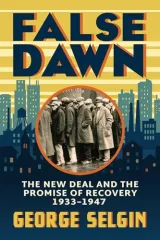 9. False Dawn George Selgin · 2025Recommended
Monetary economist George Selgin asks whether the New Deal actually ended the Depression. His answer: gold devaluation and bank stabilization worked, while cartels, wage shocks and hostility to business stalled recovery for years. It is a sharp, data-heavy history for anyone who thinks about policy regimes, expectations and how economies recover from crises.
-
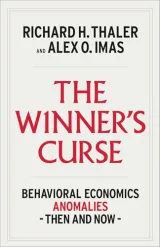 10. The Winner's Curse Richard H. Thaler and Alex O. Imas · 2025Recommended
Nobel laureate Richard Thaler and Chicago Booth economist Alex Imas take the Anomalies columns that launched behavioral economics and test each one against 30 years of later research. This is a new book, not a reprint of Thaler's 1992 collection. For investors it covers why auction winners overpay, why people overvalue what they own, and which market anomalies have held up.
-
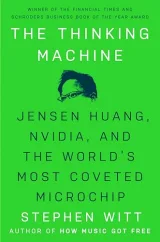 11. The Thinking Machine Stephen Witt · 2025Recommended
Winner of the 2025 FT and Schroders Business Book of the Year. Stephen Witt tells how Nvidia went from a Denny's booth and a near-fatal first chip to the most valuable company on earth. Built on rare access to Jensen Huang and his circle, it shows investors why a stock that went nowhere for more than a decade became the main bet on artificial intelligence.
-
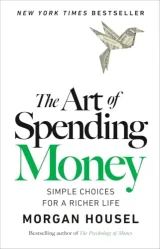 12. The Art of Spending Money Morgan Housel · 2025Recommended
Morgan Housel follows The Psychology of Money with the other half of the problem: how to use wealth once you have it. Through short, story-driven chapters, he argues that status spending has no finish line, that over-saving is its own mistake, and that the best return money buys is independence. It is useful for well-paid professionals, and for advisors who counsel them.
-
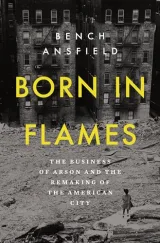 13. Born in Flames Bench Ansfield · 2025Recommended
The 1970s arson wave that burned the Bronx is usually blamed on tenants. Historian Bench Ansfield follows the money instead: insurance priced and sold so badly that a building could be worth more burned than standing. It is a sharp study of moral hazard, mispriced risk and an insurance industry that made its money investing premiums, with lessons for today's climate-risk insurance markets.
-
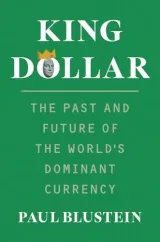 14. King Dollar Paul Blustein · 2025
A veteran Washington Post and Wall Street Journal economics reporter takes on the perennial forecast that the dollar is about to lose its crown. Blustein weighs the renminbi, crypto and the debt hawks against the dollar's track record and concludes that only a self-inflicted policy blunder in Washington could dethrone it. Useful for anyone who prices FX, rates or geopolitical risk.
-
 15. The Mysterious Mr. Nakamoto Benjamin Wallace · 2025
Benjamin Wallace wrote Wired's first feature on Bitcoin in 2011. Here he tries to identify Satoshi Nakamoto, the pseudonymous creator whose untouched coins are worth an eleven-figure sum. The hunt doubles as a history of how a cypherpunk payment system became a speculative asset class, and a lesson in how much of crypto's value rests on a missing founder.
-
 16. No More Tears Gardiner Harris · 2025
Former New York Times pharma reporter Gardiner Harris takes apart Johnson & Johnson's reputation product by product, from baby powder and Tylenol to Risperdal, Duragesic and metal hip implants. For investors it is a long case study in how a blue-chip brand can hide legal and regulatory liabilities for decades, and what that does to the value of corporate trust.
-
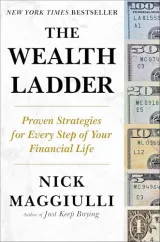 17. The Wealth Ladder Nick Maggiulli · 2025
Nick Maggiulli of Ritholtz Wealth Management argues that most financial advice fails because it ignores where the reader starts. His answer is six wealth levels, each ten times the one before, from under $10,000 to over $100 million, each with its own rules for spending, earning and investing. It is a practical, data-driven framework for anyone advising clients or planning their own money.
-
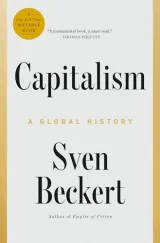 18. Capitalism Sven Beckert · 2025
Harvard historian Sven Beckert, author of Empire of Cotton, tells the thousand-year history of capitalism from twelfth-century merchants in Aden to Cambodian garment factories. His argument is that capitalism was global from the start and built by states, coercion and empire as much as by markets. A long but rewarding history of where capital and finance came from.